
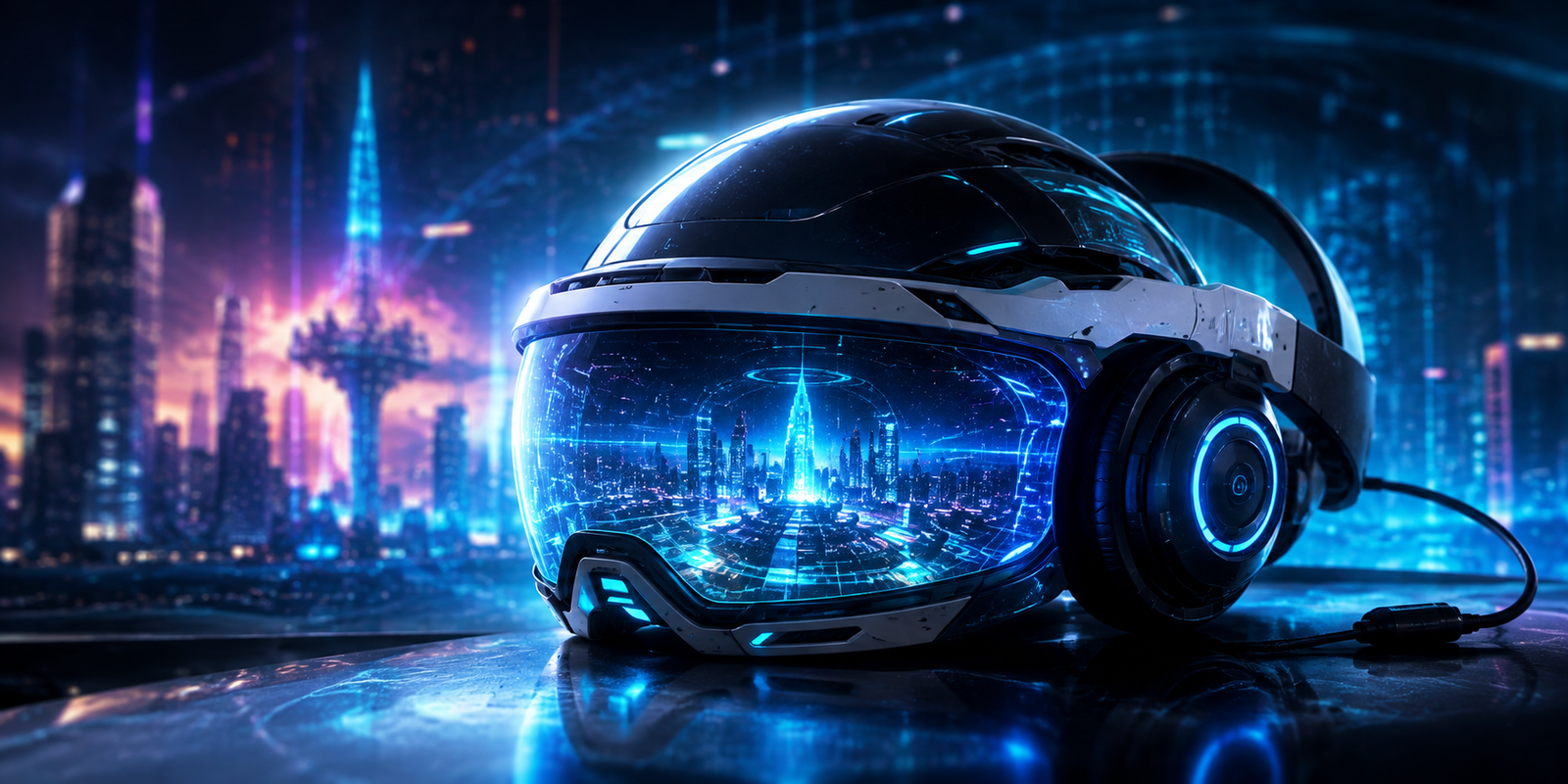
On November 6, 2022, within the fictional universe conceived by Japanese author Reki Kawahara in Sword Art Online, ten thousand eager technology enthusiasts reclined across their beds, placed a sleek helmet known as the NerveGear over their heads, and spoke the iconic vocal command that would define modern cybernetic storytelling: “Link Start!”. In a fraction of a second, bioelectric sensory signals from the physical world were silenced, bodily perception dissolved, and human consciousness was transported into the floating digital castle of Aincrad — a sprawling fantasy realm where every sword strike, gust of wind, and metallic armor texture felt as tangible as physical reality itself.
Within the canon of the anime and light novels, the NerveGear achieves what is termed FullDive Technology through an ingenious biological mechanism: the device intercepts and blocks all descending voluntary motor commands at the base of the brainstem, preventing players from thrashing in their beds while sprinting in the game, while simultaneously stimulating primary sensory pathways. Through high-frequency electromagnetic transceivers, the head-mounted system replaces optical, auditory, tactile, gustatory, and olfactory stimuli with synchronized digital data packets delivered from a central server.
Yet behind the dramatic narrative of virtual entrapment orchestrated by scientist Akihiko Kayaba, contemporary applied neuroscience and neural engineering are laying the real-world foundations for this technology. The paradigm shift away from traditional head-mounted displays (such as the Apple Vision Pro or Meta Quest) toward bidirectional Brain-Computer Interfaces (BCIs) has long crossed the threshold from science fiction to active clinical research. Today, frontier neuroengineering laboratories are decoding motor intentions and writing tactile sensations directly into the human neocortex.
In this technical deep dive from Reach Technocracy, we dissect the biological feasibility of full sensory immersion: the electromagnetic physics of non-invasive cortical stimulation through the skull, intracortical microstimulation of the primary somatosensory cortex (S1) to synthesize touch, the neurochemical encoding of taste and smell within the insular cortex, and the elegant sleep-paralysis circuit that the human brain executes naturally every single night during REM sleep.
1. The NerveGear Architecture: The Engineering Limits of Non-Invasive Bidirectional BCIs
To fabricate the illusion of an unbroken artificial reality without requiring open neurosurgery, the NerveGear is portrayed as a high-density Non-Invasive Bidirectional Brain-Computer Interface. In bioengineering, this mandates executing two monumental computational tasks in parallel: high-fidelity “reading” (decoding the user’s voluntary motor intents and commands) and high-density “writing” (stimulating distinct neural ensembles to generate sensory qualia).
The Cranial Calvarium Barrier and Spatial Resolution Constraints
The foremost physical barrier separating the fictional NerveGear from reality is human cranial anatomy. The human skull (calvarium) is a dense, multi-layered bony structure composed of compact cortical bone sandwiching a porous diploë layer. Millions of years of natural selection engineered this bone to shield brain parenchyma from mechanical trauma and attenuate external electromagnetic noise.
Current non-invasive neural interfaces, such as Electroencephalography (EEG) and Functional Near-Infrared Spectroscopy (fNIRS), record bioelectric field fluctuations in the microvolt (µV) range that must propagate through cerebrospinal fluid, the meninges, the thick cranium, and the scalp. This creates an aggressive spatial low-pass filter: discrete synaptic spikes smear across centimeters of surface area. Attempting to decode the precise motor intent of moving a specific virtual finger with sub-10-millisecond latency using purely external radiofrequency arrays is akin to discerning a whispered conversation in a stadium while standing outside the concrete facade.
Thermal Thresholds and the Specific Absorption Rate (SAR) Limit
In the anime, the NerveGear utilizes high-frequency microwave arrays to penetrate bone and modulate synaptic action potentials. However, electromagnetic bio-thermodynamics establishes an unyielding safety ceiling known as the Specific Absorption Rate (SAR).
Brain tissue consists of approximately 80% water and electrolyte-rich saline solutions. When subjected to high-intensity microwave radiation, dipolar water molecules oscillate at billions of cycles per second, converting electromagnetic energy directly into thermal kinetic heat — the exact thermodynamic principle behind domestic microwave ovens. Any external helmet emitting electromagnetic radiation powerful enough to non-invasively induce action potentials through bone would cause dielectric heating, cerebral edema, and thermal coagulation necrosis long before generating a single coherent pixel of virtual vision.
2. Writing Reality into the Brain: The Neurobiology of Synthetic Senses
For FullDive immersion to be perceived as authentic, an interface cannot simply project visual pixels before the retina; it must bypass peripheral sensory receptors and commandeer the thalamic sensory relay — the brain’s central switching station that routes sensory information to the neocortex.
Vision and Audition: Bypassing the Retina to the Visual Cortex
In biological vision, retinal photoreceptors convert photons into action potentials transmitted via the optic nerve to the Lateral Geniculate Nucleus (LGN) of the thalamus, which routes the signals to the primary visual cortex (V1) in the occipital lobe. Achieving FullDive requires artificially injecting retinotopic excitation patterns directly into V1 or the LGN.
Clinical trials involving intracortical visual prostheses have confirmed that micro-electrical stimulation of V1 evokes phosphenes — localized points of perceived light in the visual field. However, transitioning from discrete glowing dots to ultra-high-definition, 120-Hz spatial rendering demands the simultaneous, phase-coherent modulation of millions of cortical neurons across disparate cortical columns.
Touch and Proprioception: Microstimulation of the Somatosensory Cortex (S1)
The defining technical milestone of Sword Art Online is high-fidelity haptic feedback: players feel the textured leather of a sword hilt, the cold impact of steel armor, and environmental wind pressure. In real-world neurobiology, tactile sensations are processed within the Primary Somatosensory Cortex (Area S1) along the postcentral gyrus.
Breakthrough clinical studies have proven that intracortical microstimulation of the human somatosensory cortex (ICMS) can successfully evoke focal tactile sensations, static pressure, and proprioceptive joint-angle perceptions directly in the brains of paralyzed individuals without engaging peripheral nerves. By modulating stimulus pulse frequency, amplitude, and charge density, researchers reproduce graded sensations of pressure. The engineering bottleneck for a true NerveGear lies in sensory channel density: the human hand contains thousands of mechanoreceptors firing asynchronously, an architecture that current rigid electrode arrays cannot yet match across the entire body.
Smell and Taste: The Chemical Frontier of the Insular Cortex
Replicating a virtual banquet in Aincrad requires addressing the chemical senses:
- Primary Gustatory Cortex (Anterior Insula): Taste perceptions are decoded within the insular cortex and frontal operculum. Electrical microstimulation can evoke basic primary taste modalities (sweet, salty, bitter, sour, and umami).
- Olfactory Bulb and Piriform Cortex: Olfaction is unique among human senses because it bypasses the thalamus entirely, projecting directly from the nasal epithelium to the olfactory bulb and piriform cortex.
Because approximately 80% of human culinary flavor perception is derived from retronasal olfaction rather than tongue papillae, synthesizing complex gastronomic aromas without releasing physical chemical compounds requires stimulating vast, combinatorial configurations of glomeruli in the olfactory bulb.
Technical Comparison: NerveGear Fiction vs. Real-World Neuroengineering
| Biological Function | NerveGear Fiction (Sword Art Online) | Neuroengineering State of the Art (2026) |
|---|---|---|
| Neural Interface Modality | Completely non-invasive external helmet using high-frequency microwave transceivers. | Invasive intracortical microelectrode arrays (Neuralink N1) or semi-invasive ECoG beneath the dura mater. |
| Tactile & Haptic Feedback | Full-body texture, weapon weight, temperature, and graded pain feedback across all limbs. | Intracortical microstimulation (ICMS) in S1 evoking localized pressure points and basic proprioception. |
| Motor Blockade | Electromagnetic signal interception at the base of the brainstem and upper cervical spine. | Natural REM sleep atonia mediated by GABAergic and glycinergic brainstem-spinal circuits. |
| Gustatory & Olfactory Synthesis | Full digital synthesis of complex virtual meals and scents with zero chemical consumables. | Rudimentary electrogustation on the tongue and external microfluidic chemical vapor cartridges. |
| Thermal & Biological Safety | Operates continuously on internal batteries, harboring secret lethal microwave capacitors. | Strict Specific Absorption Rate (SAR) limits to prevent any thermal elevation in brain parenchyma. |
3. Motor Blockade: How FullDive Disables Voluntary Movement Without Halting Respiration
One of the most delicate engineering propositions of FullDive technology is bodily immobilization. In a virtual combat environment, players run, dodge, and parry; if their physical muscles executed these commands in bed, users would suffer blunt-force trauma, bed falls, and fractures within minutes.
The NerveGear addresses this by claiming to “intercept efferent motor signals” as they descend from the primary motor cortex (M1) toward the spinal cord, leaving autonomic and vegetative systems untouched.
The Biological Blueprint: REM Sleep Atonia via GABA and Glycine
Nature has already engineered this exact biological mechanism into the mammalian central nervous system. During Rapid Eye Movement (REM) sleep — the phase where the most vivid, kinetic dreams occur —, the human body enters a state of flaccid muscle paralysis known as REM sleep motor atonia.
Seminal investigations into the neurobiology of motor atonia brainstem circuits reveal that glutamatergic neurons within the sublaterodorsal nucleus (SLD) of the pons project to inhibitory premotor interneurons in the ventromedial medulla. These interneurons project downward through the spinal cord, releasing two primary inhibitory neurotransmitters: GABA (gamma-aminobutyric acid) and Glycine.
Upon binding to receptors on alpha motor neurons in the spinal cord’s ventral horn, GABA and glycine trigger the opening of ligand-gated chloride channels. Influx of negative chloride ions hyperpolarizes the neuronal membrane to approximately -80 mV. Consequently, even when the motor cortex fires intensive motor sequences in a dream, the electrical action potentials cannot cross the hyperpolarized spinal barrier, keeping skeletal muscles completely relaxed.
The Danger of Autonomic Collapse and Asphyxiation
Attempting to artificially induce motor blockade via an external device like the NerveGear introduces lethal physiological risks. The brainstem and upper cervical cord do not exclusively regulate somatic movement; they house the pre-Bötzinger complex and phrenic nerve pathways, which autonomously drive diaphragmatic respiration.
If an external electromagnetic field broadly suppressed motor neuron transmission in the brainstem, it would simultaneously paralyze diaphragmatic breathing and baroreceptor cardiovascular regulation, resulting in mechanical asphyxia, hypoxia, and cardiac arrest within minutes.
4. Kayaba’s Lethal Trap: The Biophysics of Microwave Thermal Injury
At the climax of Sword Art Online‘s opening arc, creator Akihiko Kayaba reveals that the NerveGear’s high-power capacitors were engineered as a deadly weapon: if the helmet is forcibly removed in the physical world or if the player’s avatar HP reaches zero, the transceivers emit a concentrated burst of microwave radiation to destroy the user’s brain.
Dielectric Heating and Coagulative Protein Denaturation
From the perspective of forensic neuropathology and biophysics, how would such an event unfold? Contrary to popular cinematic tropes, human brain tissue would not detonate.
The actual lethal mechanism would be acute coagulative thermal necrosis. A sustained, multi-kilowatt burst of microwave energy focused into the closed cranial vault would rapidly heat the cerebral parenchyma from its baseline 37 °C to above 45 °C to 50 °C within seconds. At these temperatures, irreversible biophysical cascades occur:
- Irreversible Protein Denaturation: Critical cellular enzymes, ion pumps (Na+/K+-ATPase), and structural neurofilaments lose their quaternary protein folding, coagulating like the albumen of an egg.
- Blood-Brain Barrier Collapse: Extreme hyperthermia disrupts endothelial tight junctions, precipitating catastrophic vasogenic brain edema and fatal intracranial pressure spikes.
- Instantaneous Membrane Depolarization: The physical destruction of membrane integrity abolishes action potential propagation, shutting down autonomic respiratory control in the medulla oblongata within milliseconds.
The Transition to the AmuSphere: Safety Interlocks and Passive Limits
Addressing the security vulnerabilities that enabled the Aincrad incident, the fictional sequel introduces the AmuSphere. This redesigned console replaces high-power microwave transmitters with low-intensity electromagnetic sensor rings physically incapable of producing thermal damage even during complete component short-circuits. Furthermore, it incorporates optical heart-rate, pulse-oximetry, and galvanic skin sensors that automatically terminate the FullDive session if physiological parameters deviate from safe clinical ranges.
5. Critical Analysis, Bioethical Bottlenecks, and the Real-World Timeline
While FullDive technology remains a visionary benchmark for virtual immersion, neural engineering confronts physical constraints that will require decades of systematic research to navigate safely.
Biocompatibility Hurdles and Glial Scarring
To achieve the sensory bandwidth required to replace human perception, science indicates that invasive or semi-invasive neural interfaces will be necessary. However, living brain tissue exhibits an active immune response to foreign synthetic bodies:
Implanting intracortical microelectrodes triggers a chronic neuroinflammatory cascade driven by activated microglia and astrocytes, termed reactive gliosis. Over months, an insulating glial sheath encapsulates the electrode tips, increasing electrical impedance and demanding higher stimulation voltages to activate neurons, which risks localized electrochemical tissue toxicity and focal epileptogenesis.
The Immersion Roadmap: When Will Safe FullDive Be Achievable?
The progression toward immersive neural computing will unfold across distinct technological horizons:
- Short-Term (2026–2028): Non-invasive, low-bandwidth neural wearables (graphene-based dry EEG headbands and smart earbuds) combined with spatial computing headsets. Users will navigate software menus and execute discrete digital commands through mental intent, while retaining physical displays and speakers for sensory input.
- Medium-Term (2029–2035): Bidirectional cortical prostheses possessing thousands of channels capable of restoring fine tactile sensations and mechanical proprioception for paralyzed individuals, cementing the safety profiles of intracortical microstimulation in S1.
- Long-Term (2036–2050): The potential maturation of endovascular neural arrays (stentrode systems) and biocompatible neural dust delivered via the bloodstream to interface with deep thalamic nuclei without open craniotomies, opening the first regulated medical and research environments for multi-sensory closed-loop immersion.
Reki Kawahara’s Sword Art Online captured global imagination not merely through sword battles or avatar aesthetics, but by tapping into an ancient human aspiration: liberating conscious experience from biological confinement to explore worlds created by pure human creativity.
Modern neuroscience reveals that what we call “physical reality” is ultimately an internal bioelectric simulation rendered within the dark confines of our skull. As engineering advances our ability to decipher and synthesize that electrochemical language with microscopic precision and thermodynamic responsibility, the boundary between the physical and the virtual will cease to be an insurmountable barrier, evolving into an interface of synaptic bandwidth.
Would you step into a real-world FullDive system knowing that an artificial machine held complete sensory control over your nervous system? Do you believe non-invasive technology will eventually conquer the cranial barrier, or will true immersion belong exclusively to direct neural implants? Share your analysis in the comments below and join the discussion across our deep-tech research community!
🔭 Continue Exploring the Frontier of Science and Technology: