
If you watched Andrew Niccol’s immortal science fiction classic Gattaca (1997), you undoubtedly recall its haunting vision of a future where human biology has been entirely stripped of chance: before conception, human embryos have their genetic code exhaustively audited and edited to eliminate congenital heart defects, myopia, baldness, and oncological predispositions, dividing society into the genetically engineered “Valids” and the “In-Valids” born through conventional biological lotteries.
If your pop-culture memory navigates the dystopian metropolises of Cyberpunk 2077 or the seminal cybernetic universe of Ghost in the Shell (1995), the seamless integration of biological cortex and semiconductor circuitry personifies the absolute zenith of transhumanism: high-density neural implants (Cyberware), direct cranial data ports, and Brain-Computer Interfaces that allow operators to navigate digital networks, stream memories, and pilot heavy industrial mechatronics purely through thought. In Altered Carbon (2018), human consciousness is digitized into cortical stacks, allowing the mind to be transferred indefinitely across synthetic biological bodies (Sleeves), rendering physical death a mere technical inconvenience. And across cinematic warnings such as I Am Legend (2007) and Resident Evil (2002), the accidental escape of engineered viral vectors and poorly calibrated gene therapies illustrates humanity’s ancestral apprehension regarding the manipulation of life’s fundamental code.
For over 3.8 billion years, biological life on Earth evolved through a blind, stochastic, and agonizingly slow mechanism: Darwinian natural selection driven by random genetic point mutations and filtered through the crucible of environmental survival. For millennia, human medicine remained a passive, reactive observer of this process, restricted to treating symptoms with rudimentary herbal extractions, small-molecule synthetic chemicals, and invasive mechanical surgeries.
However, in 2026, human civilization has crossed the most consequential technological threshold in biological history: The Paradigm Shift from Descriptive Biology to Programmable Biology.
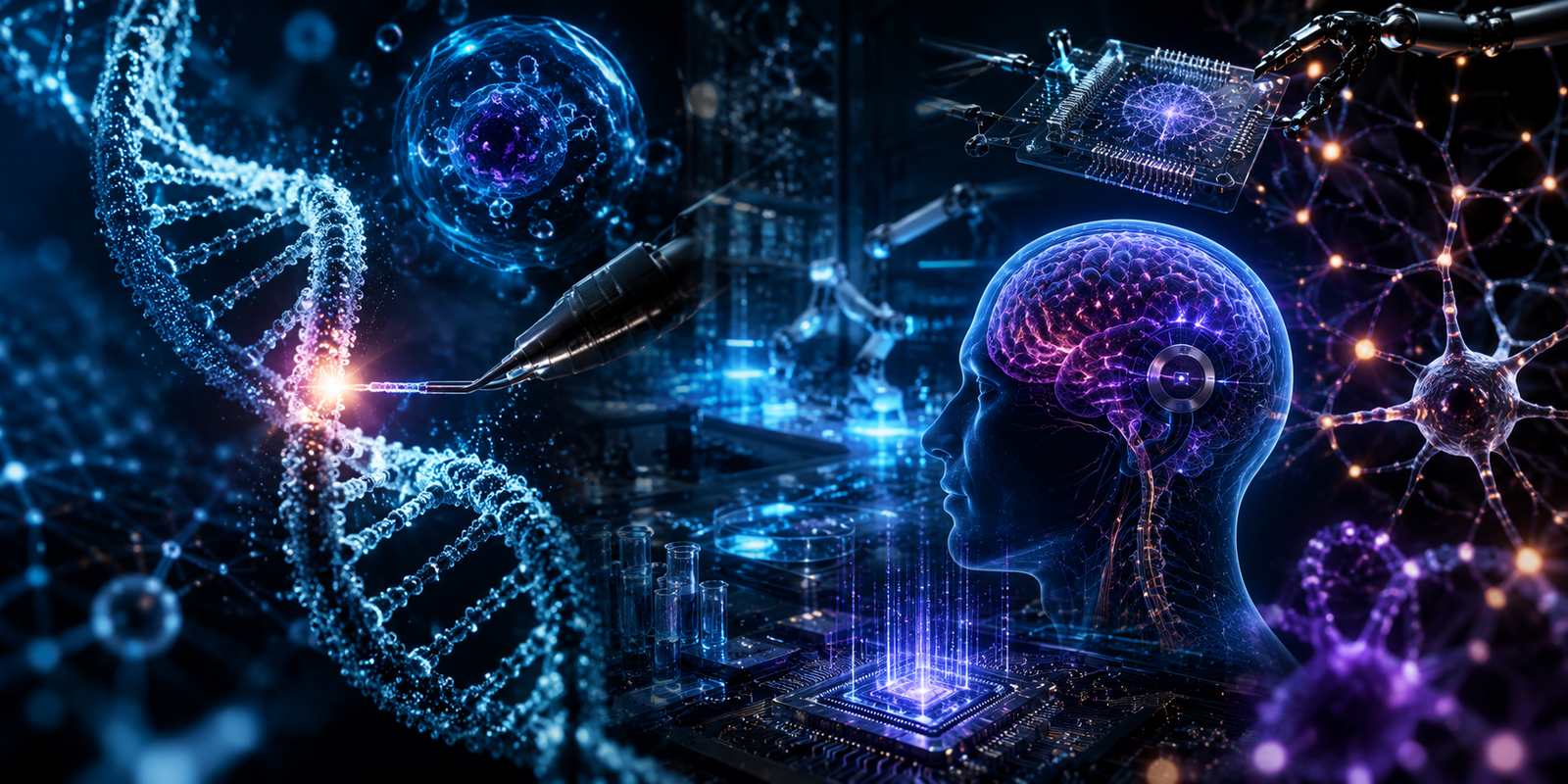
The code of life—the four-letter quaternary nucleotide alphabet of Adenine, Cytosine, Guanine, and Thymine composing the DNA double helix and messenger RNA transcripts—is no longer an inscrutable mystery. It has been transformed into a digitally editable, compilable, and reprogrammable software language. Ultra-precise molecular surgery powered by CRISPR-Cas9 and Prime Editing corrects hereditary genetic mutations directly inside living human cells; Personalized Therapeutic mRNA Vaccines train the cytotoxic T cells of the immune system to track and eradicate metastatic tumors in real time; High-Density Brain-Computer Interfaces (BCIs) such as Neuralink’s N1 Telepathy chip fuse biological cortical neurons with silicon microprocessors; controlled cocktails of Yamanaka Factors (OSK) reset the epigenome to rejuvenate aging tissues and reverse biological age; and Molecular DNA Storage and Organoid Intelligence (OI) merge genetic code and living human brain organoids with computing architectures, shattering the thermal and physical bottlenecks of classical silicon.
This master document serves as the Official Topic Hub of Reach Technocracy for the Frontier Biotechnology, Genomic Engineering, and Applied Neurotechnology ecosystem. Here, you will find the definitive theoretical, molecular, clinical, and architectural framework connecting all our investigations: from genome engineering and precision immunotherapy to neural cybernetics, biological reversal of aging, and molecular biocomputing.
Curated Reading Paths (Choose Your Track)
To maximize the strategic value of this master guide based on your professional background, technical expertise, and operational goals, select your recommended reading path:
- 🟢 Track 1: The Tech & Biology Enthusiast
Focus: Foundational principles, pop-culture mental models (Gattaca, Cyberpunk, Altered Carbon), human health breakthroughs, and societal implications.
Suggested Route: Introduction ➜ Prerequisites Glossary ➜ Chapters 1, 2, and 4 ➜ Fact vs. Sci-Fi Matrix ➜ Conclusion. - 🔵 Track 2: The Bioengineer, Researcher & Physician
Focus: Molecular cleavage biochemistry, delivery vectors (LNPs/AAVs), electrophysiological spike decoding, Horvath DNA methylation clocks, and Bio-FET integrated circuits.
Suggested Route: Executive Takeaways across all chapters ➜ Chapters 1 through 5 in full ➜ Access all connected In-Depth Spoke Essays. - 🟣 Track 3: The Biotechnology Executive & Deep-Tech Investor
Focus: Regulatory approval pathways (FDA/EMA), clinical trial phase compression, semiconductor-biotech convergence, and the 2026–2035 Strategic Technology Roadmap.
Suggested Route: Executive Takeaways ➜ Chapter 3 (Neuralink) ➜ Chapter 4 (Longevity) ➜ Chapter 7 (Roadmap) ➜ Download the Full Executive Dossier.
Fundamental Prerequisites & Key Concepts
Modern biotechnology operates across an interdisciplinary matrix uniting molecular genetics, immunology, neuroengineering, and solid-state semiconductor physics. Below are the six essential conceptual pillars:
- CRISPR-Cas9 & Prime Editing: A molecular endonuclease platform adapted from bacterial adaptive immunity against phages. It utilizes a synthetic guide RNA (gRNA) to locate target genomic loci and the Cas9 enzyme to introduce a double-strand break (DSB). Prime Editing represents the second-generation search-and-replace evolution: fusing an engineered reverse transcriptase to a catalytically impaired Cas9 nickase and a prime editing guide RNA (pegRNA), it directly writes new genetic sequences into genomic DNA without double-strand breaks, minimizing unintended insertion-deletion (indel) mutations and chromosomal translocations.
- Therapeutic mRNA Vaccines & Tumor Neoantigens: A personalized oncology platform where synthetic messenger RNA encapsulated in ionizable Lipid Nanoparticles (LNPs) acts not as a preventative prophylactic against viruses, but as a customized immunotherapeutic prescription. It instructs the patient’s antigen-presenting dendritic cells to translate and present patient-specific mutated tumor peptides (neoantigens), mobilizing a clonal army of cytotoxic CD8+ T cells to hunt and eradicate cancer cells throughout the body.
- High-Density Brain-Computer Interfaces (BCIs) & Neuralink N1: Fully implantable medical devices that record action potentials (spikes) from thousands of individual motor cortex neurons simultaneously via biocompatible, micron-scale flexible polymer threads. The on-chip Application-Specific Integrated Circuit (ASIC) amplifies, filters, and digitizes neural telemetry in real time, transmitting broadband motor intentions wirelessly to external computational decoders.
- Epigenetic Reprogramming & Yamanaka Factors (OSK): A biological discovery pioneered by Nobel laureate Shinya Yamanaka demonstrating that terminally differentiated somatic adult cells can be reprogrammed back into induced Pluripotent Stem Cells (iPSCs). The controlled in vivo pulse expression of the tripartite factor cocktail Oct4, Sox2, and Klf4 (OSK) removes aberrant DNA methylation marks accumulated over decades of cellular aging, resetting the Horvath epigenetic clock to a youthful state without erasing somatic cellular identity or forming malignant teratomas.
- Molecular DNA Storage & Bio-FET Transistors: Digital data storage utilizing the four chemical nucleotide bases (A, C, G, T) of synthetic DNA molecules, offering an ultra-dense storage medium of 215 Petabytes per gram with zero quiescent power consumption. When integrated with biological field-effect transistors (Bio-FETs) on CMOS silicon wafers, DNA hybridization enables massively parallel in-memory biochemical pattern matching and vector search.
- Organoid Intelligence (OI) in High-Density Microelectrode Arrays (HD-MEAs): Three-dimensional lab-grown human brain tissue (brain organoids) cultured from stem cells and coupled to high-density microelectrode arrays. These living neural networks learn dynamic closed-loop computational tasks in real time while consuming up to six orders of magnitude (10⁶) less electrical energy than silicon-based GPU clusters.
Dynamic Timeline of the Biotechnology Revolution
- Phase 1 (1953–2012: From the Double Helix to the Birth of CRISPR):
– 1953: James Watson, Francis Crick, and Rosalind Franklin decipher the double-helix structure of DNA.
– 1977: Frederick Sanger develops chain-termination DNA sequencing.
– 2003: Completion of the Human Genome Project after thirteen years of international collaboration.
– 2006: Shinya Yamanaka discovers the four transcription factors (OSKM) that reprogram adult cells into iPSCs.
– 2012: Jennifer Doudna and Emmanuelle Charpentier demonstrate CRISPR-Cas9 as a programmable genome editing tool. - Phase 2 (2013–2023: The mRNA Revolution and the First Approved CRISPR Therapy):
– 2019: David Liu and his team at the Broad Institute of MIT and Harvard engineer Prime Editing.
– 2020: mRNA vaccines against COVID-19 (BioNTech/Pfizer and Moderna) prove the safety and scalability of lipid nanoparticle delivery across billions of humans.
– November 2023: The UK MHRA and US FDA grant historic approval for Casgevy (exagamglogene autotemcel), the world’s first CRISPR-Cas9 therapeutic for sickle cell disease and transfusion-dependent beta-thalassemia. - Phase 3 (2024–2026: The Current Inflection Point — Human Implants, Cancer Vaccines & in vivo Longevity):
– 2024: Neuralink successfully implants the N1 chip in its first human patient (Noland Arbaugh), demonstrating wireless motor cursor control and video gameplay purely through thought.
– 2025: BioNTech and Moderna advance Phase 3 global randomized trials for individualized neoantigen mRNA cancer vaccines against melanoma and pancreatic cancer; Altos Labs and the Salk Institute validate safe in vivo OSK epigenetic reset across animal organ systems.
– 2026: FinalSpark deploys commercial cloud-connected organoid biocomputing servers; Insilico Medicine advances AI-discovered Rentosertib into Phase III human trials; and in vivo Prime Editing enters human clinical trials for genetic liver and cardiovascular disorders. - Phase 4 (2027–2035: The Frontier of Synthetic Biology and Radical Healthspan Extension):
– 2027–2029: Commercial FDA approvals for personalized mRNA cancer vaccines across multiple solid tumors; widespread deployment of broadband BCIs for motor paralysis and visual restoration (Blindsight).
– 2030–2032: First approved systemic epigenetic reprogramming therapies for biological healthspan extension; enterprise adoption of green data centers powered by molecular DNA archival storage.
– 2033–2035: Near-total eradication of severe monogenic hereditary diseases; hybrid biological-silicon organoid computers managing real-time autonomous AI workloads with negligible energy footprint.
1. Molecular Surgery of the Code of Life: From CRISPR-Cas9 to Prime Editing
📌 Chapter Key Takeaways:
1. CRISPR-Cas9 transformed genetic engineering from a random, mutagenic insertion process into an RNA-guided molecular surgery of absolute locus precision.
2. The historic 2023 FDA approval of Casgevy established a definitive clinical cure for sickle cell disease, verifying the therapeutic efficacy of CRISPR in human medicine.
3. Second-generation Base Editing and Prime Editing overcome the limitations of classical CRISPR by rewriting nucleotide bases without double-strand DNA breaks, virtually eliminating off-target chromosomal rearrangements.
For decades, traditional gene therapy relied on recombinant viral vectors (such as retroviruses and lentiviruses) that integrated therapeutic genetic payloads randomly throughout the patient’s chromosomes. This stochastic insertion ran the perpetual risk of insertional mutagenesis: disrupting critical tumor-suppressor genes and triggering lethal oncogenesis.
The discovery of the CRISPR-Cas9 adaptive immune system in bacteria and archaea fundamentally dismantled this limitation. The classical CRISPR-Cas9 system operates as a molecular search-and-cut engine comprised of two fundamental components: a synthetic Guide RNA (gRNA) containing a 20-nucleotide spacer complementary to the target genomic locus, and the Cas9 Endonuclease. Once the gRNA hybridizes with target DNA adjacent to a Protospacer Adjacent Motif (PAM, 5′-NGG-3′ for Streptococcus pyogenes Cas9), the enzyme’s RuvC and HNH nuclease domains induce a blunt Double-Strand Break (DSB) precisely three base pairs upstream of the PAM.
The host cell recognizes the double-strand break and activates one of two endogenous DNA repair pathways:
- Non-Homologous End Joining (NHEJ): An error-prone repair mechanism that ligates the broken DNA ends back together, frequently introducing insertions and deletions (indels). This frameshift mutation permanently disrupts the open reading frame, achieving targeted Gene Knockout.
- Homology-Directed Repair (HDR): A high-fidelity repair pathway active during the S/G2 phases of the cell cycle. When co-delivered with an exogenous donor DNA template, HDR recombines the donor sequence into the cleavage site, achieving precise Gene Knock-in and point mutation correction.
The Clinical Triumph of Casgevy
The definitive proof of CRISPR’s translational maturity arrived with the global regulatory approval of Casgevy (exagamglogene autotemcel), developed by Vertex Pharmaceuticals and CRISPR Therapeutics. Sickle cell disease and beta-thalassemia are severe monogenic hemoglobinopathies caused by mutations in the adult beta-globin gene (HBB). Rather than attempting to repair the mutated HBB gene directly across billions of cells, Casgevy uses an elegant biological workaround:
- It harvests CD34+ hematopoietic stem and progenitor cells (HSPCs) from the patient’s bone marrow.
- Electroporates them with CRISPR-Cas9 ribonucleoprotein (RNP) complexes to disrupt the erythroid-specific enhancer of the BCL11A repressor gene.
- Reinfuses the modified cells back into the patient following conditioning. Disabling BCL11A unleashes the lifelong production of Fetal Hemoglobin (HbF), completely preventing red blood cell sickling, eliminating vaso-occlusive crises, and freeing beta-thalassemia patients from lifelong blood transfusions.
Second-Generation Precision: Base Editing and Prime Editing
Despite its revolutionary success, classical CRISPR-Cas9 relies on double-strand breaks (DSBs), which can induce unintended p53-mediated DNA damage responses, large genomic deletions, and dangerous chromosomal translocations. To achieve absolute genetic surgery without DSBs, the laboratory of Dr. David Liu at the Broad Institute of MIT and Harvard engineered two second-generation technologies:
- Base Editing: Fuses a catalytically dead Cas9 (dCas9) or Cas9 nickase (which nicks only one strand) to cytidine or engineered deoxyadenosine deaminase enzymes. Cytosine Base Editors (CBEs) convert C-G base pairs into T-A, while Adenine Base Editors (ABEs) convert A-T into G-C through targeted deamination without breaking the DNA backbone. Given that over 60% of known human pathogenic point mutations are single-nucleotide transitions, base editors offer safe, curative interventions for genetic conditions like progeria and familial hypercholesterolemia.
- Prime Editing (The Total Search-and-Replace Molecular Word Processor): Fuses a Cas9 nickase (H840A) to an engineered Reverse Transcriptase enzyme, guided by a specialized Prime Editing Guide RNA (pegRNA). The pegRNA contains both a spacer specifying the genomic target and an extended 3′ tail encoding the desired genetic edits. Once the Cas9 nickase cuts the non-target DNA strand, the single-stranded DNA hybridizes with the pegRNA primer-binding site, and the reverse transcriptase copies the new genetic code directly into the opened DNA flap. Prime editing can execute all 12 possible base-to-base transitions and transversions, as well as precise insertions and deletions up to dozens of base pairs without requiring donor DNA templates or double-strand breaks.
🔬 IN-DEPTH TECHNICAL ESSAY:
To explore lipid nanoparticle in vivo delivery vectors, off-target mathematical cleavage assays, and the bioethics of human germline editing, read our complete analysis:
👉 CRISPR-Cas9 and Genome Engineering: Super-Soldiers and Gene Therapy
2. The mRNA Revolution and Cancer Immunotherapy: Training the Immune System to Hunt Tumors
📌 Chapter Key Takeaways:
1. Messenger RNA (mRNA) platforms have evolved from prophylactic viral vaccines into the most versatile personalized cancer immunotherapy pipeline in medical history.
2. Artificial intelligence algorithms analyze whole-exome tumor biopsies to identify patient-specific neoantigens and design custom mRNA formulations in weeks.
3. In combination with anti-PD-1 checkpoint inhibitors, personalized neoantigen mRNA vaccines reduce the risk of recurrence and death by nearly 50% in aggressive solid tumors.
For over a century, classical oncology leaned upon the traditional triad of cytotoxic chemotherapy, ionizing radiation therapy, and surgical resection. While these interventions remain vital, they inflict massive systemic collateral damage on healthy tissues and frequently fail against microscopic metastatic seeding and drug-resistant tumor clones. The fundamental barrier in cancer treatment is that neoplastic cells originate from the host’s own tissues, allowing them to exploit immune checkpoint pathways (such as PD-1/PD-L1 and CTLA-4) to render themselves invisible to endogenous surveillance.
The perfection of synthetic Messenger RNA (mRNA)—pioneered by Nobel laureates Katalin Karikó and Drew Weissman through the critical incorporation of modified nucleosides (N¹-methylpseudouridine) to evade premature Toll-like receptor degradation—has unlocked Personalized Neoantigen Cancer Immunotherapy, spearheaded by clinical leaders BioNTech, Moderna, and Genentech.
The Personalized Neoantigen Vaccine Pipeline
Unlike standardized infectious disease vaccines, an individualized cancer vaccine is manufactured de novo for each specific patient through a rapid, automated biomanufacturing pipeline:
- Tumor Biopsy and Whole-Exome/Transcriptome Sequencing: Next-generation sequencing (WES/RNA-seq) compares the patient’s tumor tissue against their healthy somatic cells, identifying the entire repertoire of somatic mutations (missense mutations, frameshifts, and gene fusions) unique to that malignancy.
- AI Neoantigen Prioritization & HLA Binding Prediction: Tumor mutations generate novel mutated peptide fragments termed Neoantigens. Machine learning neural networks analyze these sequences to predict which neoepitopes possess the highest thermodynamic binding affinity for the patient’s unique Major Histocompatibility Complex molecules (MHC/HLA Class I and Class II).
- Multivalent mRNA Synthesis: A single synthetic mRNA transcript encoding up to 20 to 34 patient-specific neoantigens—flanked by optimized 5′ and 3′ untranslated regions (UTRs) and a poly-A tail—is enzymatically synthesized via in vitro transcription (IVT) and formulated inside ionizable Lipid Nanoparticles (LNPs).
- Dendritic Cell Uptake and Cytotoxic T-Cell Priming: Upon systemic or intramuscular administration, the LNPs fuse with antigen-presenting dendritic cells in draining lymph nodes. The host ribosomes translate the mRNA into the multi-neoantigen peptide string, which is cleaved by proteasomes and displayed on MHC molecules to naive T cells. This triggers a massive, polyclonal expansion of tumor-infiltrating Cytotoxic CD8+ T Lymphocytes and CD4+ Helper T Cells, programmed exclusively to recognize and destroy cancer cells possessing those mutational signatures while sparing 100% of healthy somatic tissue.
Phase 3 Clinical Milestones and Checkpoint Synergy
In landmark clinical trials (such as Moderna and Merck’s mRNA-4157/V940 combined with pembrolizumab, and BioNTech’s autogene cevumeran), personalized neoantigen mRNA vaccines combined with anti-PD-1 checkpoint blockade achieved a 44% to 49% reduction in the risk of recurrence or death in patients with resected high-risk stage III/IV melanoma. Furthermore, ongoing trials demonstrate persistent immune memory and prolonged recurrence-free survival in aggressive pancreatic ductal adenocarcinoma and non-small cell lung cancer.
🔬 IN-DEPTH TECHNICAL ESSAY:
To dissect the structural chemistry of ionizable lipid nanoparticles, MHC-I binding algorithms, and clinical survival curves, read our complete analysis:
👉 mRNA Cancer Vaccines: Personalized Medicine
3. The Cybernetic Bridge: Neuralink, High-Density BCIs, and the Brain-Silicon Fusion
📌 Chapter Key Takeaways:
1. Fully implantable high-density Brain-Computer Interfaces (BCIs) capture single-unit action potentials directly from the motor cortex with sub-millisecond temporal precision.
2. Neuralink’s N1 Telepathy implant utilizes 1,024 platinum electrodes distributed across 64 ultra-flexible polyimide threads, inserted by micron-scale surgical robotics.
3. Clinical human trials prove that paralyzed individuals can control digital interfaces and competitive video games at world-record bitrates purely through decoded motor intent.
The human brain is the most dense bioelectrical computational substrate in the known universe, containing approximately 86 billion neurons interconnected by over 100 trillion synaptic junctions. Every conscious thought, voluntary motor command, memory, and sensory perception is mediated by rapid electrochemical depolarizations across neuronal cell membranes lasting one to two milliseconds, known as Action Potentials (Spikes).
For decades, neural interface research remained bifurcated between two suboptimal extremes: non-invasive electroencephalography (EEG), whose low-amplitude microvolt signals are severely blurred, attenuated, and distorted by the skull and scalp; or rigid silicon Utah arrays, whose stiff needles induce foreign-body glial scarring and signal loss within months. The neuroengineering breakthrough engineered by Neuralink and leading academic laboratories restructured the physics and mechatronics of the neural connection.
The Neuroengineering of the N1 Implant and the R1 Robot
The N1 (Telepathy) system achieves high-bandwidth neural coupling through three integrated technological pillars:
- Ultra-Flexible High-Density Polymer Threads: The device distributes 1,024 recording sites across 64 biocompatible polyimide threads, each measuring only 4 to 6 micrometers in thickness (thinner than a human red blood cell). Their mechanical compliance allows the threads to flex with the brain’s natural vascular pulsations and cerebrospinal fluid movements, completely preventing chronic mechanical shear stress and inflammatory glial encapsulation.
- Computer Vision-Guided Micro-Surgical Robotics (The R1 Robot): Because micron-scale threads are too flexible to penetrate the pia mater manually, surgical insertion is executed by the R1 Robot. Utilizing optical coherence tomography, microscopic cameras, and machine vision, the robot uses a sub-micron needle to insert each thread individually into the motor cortex with micrometer depth precision, actively detecting and evading cortical blood vessels to eliminate intracerebral hemorrhages.
- Hermetic Custom ASIC & Inductive Telemetry: The titanium-encapsulated N1 implant replaces a small circular segment of skull bone. Its custom low-power ASIC amplifies raw microvolt neural signals, executes on-chip hardware filtering, detects spikes, and digitizes data before transmitting wireless broadband telemetry via Bluetooth/2.4 GHz RF to external host devices. The entire implant is recharged wirelessly through the intact skin via transcutaneous magnetic induction.
Human Clinical Validation and Cognitive Symbiosis
In human clinical trials (PRIME Study), paralyzed tetraplegic patients (such as Noland Arbaugh) have achieved unprecedented control of computer operating systems, online gaming environments, and CAD design software, establishing world-record neural bitrates (Bits Per Second — BPS) through real-time Adaptive Kalman Filtering and Neural Transformer decoding. Neuralink’s development roadmap extends beyond motor restoration to the restoration of functional vision for blind patients (Blindsight), the treatment of neurological disorders, and the ultimate horizon of direct, bidirectional cognitive symbiosis between human biological consciousness and synthetic artificial intelligence.
🔬 IN-DEPTH TECHNICAL ESSAY:
To explore neural spike filtering mathematics, Kalman state-space decoders, and the neuroethics of cognitive augmentation, read our complete analysis:
👉 Neuralink and Brain-Computer Interfaces (BCI)
4. The Science of Biological Reversal: Epigenetic Reprogramming and the Cure for Aging
📌 Chapter Key Takeaways:
1. The Information Theory of Aging establishes that cellular senescence is primarily driven by epigenetic noise and the loss of transcriptional identity rather than irreparable genomic damage.
2. Transient in vivo expression of Yamanaka Factors (Oct4, Sox2, Klf4 — OSK) clears aberrant DNA methylation marks, restoring youthful gene expression patterns.
3. In vivo animal trials confirm tissue regeneration in crushed optic nerves, liver, and skeletal muscle, validating the pipeline for human healthspan extension therapies.
For millennia, human philosophy and medicine treated biological senescence as an inescapable physical law—a progressive, entropic breakdown of molecular components culminating in organ failure and death. However, modern cellular biology and epigenetics have fundamentally overturned this fatalistic premise.
The Information Theory of Aging, formulated by geneticist Dr. David Sinclair at Harvard Medical School, establishes a profound conceptual analogy with digital computing: the human genome (the physical sequence of 3.2 billion DNA base pairs) is the cellular Hardware, which remains remarkably intact even in centenarians; the epigenome (the chromatin architecture, histone modifications, and DNA methylation patterns that determine which genes are turned on or off in a specific cell type) is the cellular Operating System. Biological aging is fundamentally the accumulation of epigenetic noise caused by repeated DNA double-strand break repair cycles and metabolic stress, causing specialized cells to lose their transcriptional identity.
Yamanaka Factors and Horvath Epigenetic Clocks
In 2006, Japanese scientist Shinya Yamanaka discovered that the retroviral introduction of four transcription factors—Oct4, Sox2, Klf4, and c-Myc (OSKM)—was sufficient to revert any mature somatic adult cell (such as a dermal fibroblast) back into an embryonic-like induced Pluripotent Stem Cell (iPSC), effectively rewinding its biological age to zero. Simultaneously, biostatistician Dr. Steve Horvath at UCLA developed Epigenetic DNA Methylation Clocks. By measuring the exact methylation levels across hundreds of specific CpG dinucleotide sites across the human genome using penalized regression algorithms, Horvath clocks quantify the chronological and biological age of any human tissue with extraordinary mathematical precision (± 1.5 years).
Safe in vivo OSK Therapy: Rejuvenation Without Teratomas
The historic barrier to translating Yamanaka factor reprogramming into living organisms was the risk of uncontrolled oncogenesis: continuous expression of the complete OSKM cocktail causes cells to lose their somatic identity completely, dedifferentiating into pluripotency and forming lethal germ-cell tumors called teratomas. The medical breakthrough achieved by institutions such as the Salk Institute (Dr. Juan Carlos Izpisua Belmonte), Harvard Medical School, and Altos Labs established Safe Transient in vivo Epigenetic Reprogramming:
- Exclusion of the c-Myc Oncogene: By utilizing only the tripartite factor cocktail OSK (Oct4, Sox2, and Klf4) delivered via inducible Adeno-Associated Viral (AAV) vectors, the risk of tumorigenesis is drastically minimized.
- Epigenetic Reset Without Loss of Cell Identity: Pulsed, intermittent activation of OSK recruits DNA demethylase enzymes (such as the Ten-Eleven Translocation / TET family) to strip away aberrant age-related methylation marks. This resets Horvath clocks to a youthful state while preserving the somatic identity of neurons, cardiomyocytes, and hepatocytes.
- In Vivo Regeneration Benchmarks: Transient OSK expression restored vision in mouse models of glaucoma, regenerated crushed optic nerve axons, rejuvenated aged skeletal muscle and liver tissue, and extended median lifespan in progeroid animal models by over 30%, paving the way for human clinical trials targeting age-related neurodegeneration, osteoarthritis, and organ failure.
🔬 IN-DEPTH TECHNICAL ESSAY:
To explore the mathematical equations of CpG methylation clocks, AAV inducible gene delivery systems, and clinical longevity pipelines, read our complete analysis:
👉 The Science of Biological Reversal: Epigenetic Reprogramming and Yamanaka Factors
5. Bio-Chips and Living Computation: DNA Memory and Organoid Intelligence
📌 Chapter Key Takeaways:
1. Synthetic molecular DNA stores up to 215 Petabytes of digital information per gram with zero quiescent power consumption and millenia-scale physical stability.
2. Bio-FET transistors and enzymatic synthesis convert DNA hybridization into massively parallel in-memory biochemical computing.
3. Organoid Intelligence (OI) cultures human brain tissue on high-density microelectrodes, enabling living neural biological networks to compute at 10⁶ times lower power than GPUs.
Throughout the past eight decades, digital computing and molecular biology advanced along separate tracks: computer science confined to solid-state silicon dies, copper interconnects, and electron currents; biology operating through nucleic acid biopolymers, enzymatic kinetics, and aqueous cellular membranes. In 2026, the convergence between nanotechnology and genomics has established the field of Biocomputing and Living Neural Hardware.
Molecular DNA Storage: 215 Petabytes Per Gram
Synthetic Deoxyribonucleic Acid (DNA) represents the ultimate thermodynamic storage medium engineered by nature. Binary data (0s and 1s) is transcoded into the quaternary nucleotide alphabet (A, C, G, T), synthesized chemically, and dehydrated into room-temperature solid-state capsules:
- Unmatched Data Density: A single gram of synthetic DNA stores up to 215 Petabytes (215 million Gigabytes) of data. The entirety of human digital civilization’s data (~175 Zettabytes) could be stored in a physical volume of DNA smaller than a shoebox.
- Centuries of Stability: When encapsulated in silica glass beads, DNA remains physically readable for over 1,000 to 10,000 years without data degradation, eliminating the perpetual replacement cycles and massive power footprints of magnetic tape and hard disk datacenters.
- In-Memory Biochemical Search (Bio-FETs): By immobilizing single-stranded DNA probes onto the conductive channels of Graphene Field-Effect Transistors (gFETs), complementary target sequence hybridization shifts the electrical Dirac point of the graphene channel instantaneously, executing ultra-fast parallel search across petabytes of biological data with zero CPU power.
Organoid Intelligence (OI) and Living Neural Chips
Spearheaded by pioneers such as Johns Hopkins University, Australian startup Cortical Labs (DishBrain), and Swiss company FinalSpark, Organoid Intelligence (OI) interfaces 3D clusters of living human neurons derived from induced pluripotent stem cells directly onto High-Density Microelectrode Arrays (HD-MEAs):
- The 20-Watt Thermodynamic Efficiency: While training frontier frontier AI models on clusters of thousands of GPUs consumes tens of megawatts and millions of liters of water, the human brain executes continuous multimodal perception and cognitive reasoning on a metabolic budget of a mere 20 Watts. Living neural biocomputers consume up to one million times less energy per inference than silicon chips.
- Closed-Loop Electrophysiological Learning: In milestone experiments, living neuronal organoids learned to play the arcade game Pong within five minutes of closed-loop electrophysiological feedback, dynamically reorganizing their synaptic plasticity under the Free Energy Principle.
- Cloud Biocomputing Servers: FinalSpark’s Neuroplatform operates the world’s first cloud-accessible biocomputing cluster, keeping 16 brain organoids alive for over 100 days using automated microfluidic perfusion, and allowing global researchers to train living neural networks remotely via API.
🔬 IN-DEPTH TECHNICAL ESSAYS:
To explore DNA encoding algorithms and the physics of organoid biocomputers, explore our deep dives:
👉 Bio-Chips and Molecular DNA Storage
👉 Organoid Intelligence (OI) and Living Biocomputers
6. Fact vs. Hypothesis vs. Science Fiction Matrix
| Biotechnology Dimension | 🟢 Proven Fact (State of the Art 2026) | 🟡 Scientific Hypothesis (In Active Trials) | 🔴 Science Fiction & Cultural Myths |
|---|---|---|---|
| Genome Editing | CRISPR-Cas9 approved by the FDA (Casgevy) curing sickle cell disease; Prime Editing in human clinical trials. | In vivo systemic delivery of base editors for polygenic cardiovascular risk reduction. | Designer “Gattaca” super-babies with pre-programmed genius intellect and bespoke physical traits. |
| Cancer Immunotherapy | Personalized neoantigen mRNA vaccines in Phase 3 trials reducing melanoma recurrence by 49%. | Off-the-shelf universal mRNA vaccines targeting shared oncogenic driver mutations. | A single universal “miracle cure” pill eradicating all 200+ distinct cancer types overnight. |
| Neural Interfaces (BCI) | Neuralink N1 1,024-electrode implant enabling paralyzed patients to control cursors and games by thought. | High-resolution cortical visual prosthetics (Blindsight) restoring functional sight to blind individuals. | Instantaneous cognitive memory downloading or digital consciousness uploading (Matrix / Altered Carbon). |
| Biological Longevity | Horvath epigenetic clocks measuring biological age; in vivo OSK factors restoring vision and tissue health in mammals. | Periodic systemic OSK pulse gene therapy safely reversing biological age across human organs. | Absolute physical immortality and perpetual biological invulnerability to cellular senescence. |
| Biocomputing & DNA | 215 PB/g digital data storage in synthetic DNA; living human brain organoids computing on HD-MEAs (FinalSpark). | Hybrid bio-silicon co-processors executing commercial AI inference in enterprise cloud data centers. | Spontaneous synthetic sentience and consciousness emerging in Petri dish cellular organoid cultures. |
| Biosecurity | Mandatory international gene synthesis screening (IGSC) blocking regulated pathogen sequences. | Automated AI red-teaming detecting 100% of obfuscated dual-use viral and toxic genetic payloads. | Engineered apocalyptic “zombie” viral pathogens escaping containment and collapsing global civilization. |
7. Strategic Biotechnology & Neurotechnology Roadmap (2026–2035)
Short-Term Horizon (2026–2027): Clinical Expansion and Regulatory Milestones
- Expansion of In Vivo Prime Editing: Initiation of landmark Phase 1/2 clinical trials utilizing lipid nanoparticle delivery for targeted in vivo correction of genetic liver disorders and familial hypercholesterolemia.
- First Commercial Approvals of BCI Implants: Breakthrough Device designations granted by the FDA for clinical use of high-density BCIs in ALS and tetraplegia patients, moving beyond clinical trials into standard neurosurgical procedures.
- Universal LNP-mRNA Manufacturing: Decentralized mRNA micro-factories reducing the production turnaround time for patient-specific neoantigen cancer vaccines from 6 weeks to under 14 days.
Medium-Term Horizon (2028–2030): Multi-Cancer Approvals and In Vivo Longevity Trials
- FDA Approval of Personalized Cancer Vaccines: First commercial approvals of personalized mRNA neoantigen vaccines as frontline adjuvant therapies for melanoma, non-small cell lung cancer, and pancreatic ductal adenocarcinoma.
- First Human Clinical Trials for Epigenetic Reversal: Initiation of Phase 1/2 human trials utilizing localized, inducible OSK gene therapy for age-related macular degeneration, glaucoma, and osteoarthritis.
- Commercial Deployment of DNA Archival Storage: Tier-1 cloud enterprise data centers deploying automated DNA synthesis and sequencing libraries for cold-data archival storage, slashing datacenter power consumption by 90%.
Long-Term Horizon (2031–2035): Systemic Healthspan Extension and Cybernetic Symbiosis
- Systemic Epigenetic Rejuvenation: Safe systemic therapies extending human healthy life expectancy (Healthspan) beyond 100 years with full metabolic, cognitive, and cardiovascular vitality.
- High-Bandwidth Bidirectional BCIs: Next-generation cortical implants integrating optical and bioelectrical telemetry for closed-loop sensory restoration and seamless human-AI cognitive collaboration.
- Hybrid Bio-Silicon Supercomputing: Commercial cloud biocomputers integrating organoid neural networks for edge computing and neuromorphic AI, consuming milliwatts instead of megawatts.
Conclusion: The Era of Programmable Biology
For millennia, humanity lived as the biological subject of evolutionary chance. We were defined by the random assortment of genetic alleles inherited from our ancestors, vulnerable to the slow erosion of epigenetic decay, and constrained by the physical limits of our biological brains.
The convergence of Genomics, mRNA Platforms, Neural Interfaces, Epigenetic Reprogramming, and Biocomputing has inaugurated the most profound revolution in our species’ history: The Age of Programmable Biology.
We are transitioning from a civilization that merely treats sickness to one that actively programs vitality; from an era that accepts aging as an inevitable tragedy to one that treats it as an information loss problem to be repaired; and from a species confined to biological cognition to one capable of establishing direct cybernetic bridges with synthetic intelligence.
At Reach Technocracy, we remain dedicated to opening the hood of these world-changing breakthroughs, demystifying the molecular biology, and delivering rigorous, authoritative analysis for those shaping the future of human civilization.
Frequently Asked Questions (FAQ Indexable for SEO/GEO)
1. What is the fundamental difference between classical CRISPR-Cas9 and Prime Editing?
Classical CRISPR-Cas9 introduces a double-strand break (DSB) in the DNA backbone, relying on error-prone cellular repair pathways that can introduce random insertions/deletions (indels) or chromosomal translocations. Prime Editing uses a Cas9 nickase fused to a reverse transcriptase, directly copying the desired sequence into the target locus without double-strand breaks, allowing all 12 possible base substitutions and precise insertions/deletions with virtually zero off-target genomic damage.
2. How do personalized mRNA cancer vaccines differ from preventative viral vaccines?
Preventative viral vaccines (like those for COVID-19 or flu) introduce a standardized viral antigen to train the immune system before infection occurs. Personalized mRNA cancer vaccines are custom-manufactured for an individual patient after cancer diagnosis. Whole-exome sequencing identifies the unique mutations (neoantigens) of the patient’s specific tumor, and synthetic mRNA instructs the patient’s dendritic cells to train cytotoxic T cells to hunt and eliminate cancer cells throughout the body.
3. How does Neuralink’s N1 implant connect to the human brain without damaging tissue?
The N1 implant distributes 1,024 microscopic recording electrodes across 64 ultra-flexible polyimide threads that are thinner than a human red blood cell (4 to 6 micrometers). Because they are flexible, they move naturally with the brain’s vascular pulsations, preventing mechanical shear stress and glial scarring. They are inserted individually by the computer-vision-guided R1 surgical robot, which actively detects and avoids cortical blood vessels.
4. Can epigenetic reprogramming with Yamanaka factors really reverse cellular aging?
Yes. Under the Information Theory of Aging, cellular senescence is driven by the accumulation of epigenetic noise (loss of proper DNA methylation patterns) rather than damaged DNA. Transient, controlled in vivo expression of the tripartite cocktail OSK (Oct4, Sox2, Klf4) resets the Horvath epigenetic methylation clock back to a youthful state, restoring tissue function and regenerative capacity in mammals without causing cells to lose their somatic identity or form teratoma tumors.
5. What is Organoid Intelligence (OI) and how can living human brain cells compute?
Organoid Intelligence involves culturing 3D human brain organoids derived from induced pluripotent stem cells (iPSCs) on high-density microelectrode arrays (HD-MEAs). The living neural networks receive electrophysiological sensory inputs and modify their synaptic connections in real time according to the Free Energy Principle, learning computational tasks while consuming up to one million times less electrical energy than silicon GPU clusters.
Continue Exploring the Frontier of Science and Technology
- CRISPR-Cas9 and Genome Engineering: Super-Soldiers and Gene Therapy — Molecular mechanisms and clinical translation of CRISPR.
- mRNA Cancer Vaccines: Personalized Medicine — How personalized neoantigen vaccines mobilize cytotoxic T cells.
- Neuralink and Brain-Computer Interfaces (BCI) — High-density cortical telemetry and the N1 implant.
- The Science of Biological Reversal: Epigenetic Reprogramming — Resetting Horvath clocks with in vivo OSK factors.
- Bio-Chips and Molecular DNA Storage — 215 PB/g storage and in-memory Bio-FET computing.
- Organoid Intelligence (OI) and Living Biocomputers — Human brain organoids learning on HD-MEAs.
- Hub 1: The Definitive Guide to Artificial Intelligence — Autonomous Multi-Agent Systems and Embodied Physical AI.
- Hub 2: The Definitive Guide to Quantum Computing — Qubits, Silicon Photonics, and Post-Quantum Security.