
If you followed the acclaimed science fiction series The Expanse (adapted from the novels by James S. A. Corey), you were undoubtedly captivated by the effortless speed with which vessels like the Rocinante traversed the Solar System. In that narrative universe, humanity’s expansion across the Moon, the subterranean cities of Mars, and the asteroid mining stations of the Belt was unlocked by a singular accidental breakthrough: the Epstein Drive. This magnetic fusion engine operated with near-infinite fuel efficiency, enabling spacecraft to accelerate continuously at a comfortable 1G of Earth-equivalent gravity, compressing multi-year interplanetary voyages into manageable journeys of mere weeks.
Or, if your cinematic reference is Christopher Nolan’s masterwork Interstellar, the desperate search for humanity’s next cosmic sanctuary demanded crossing colossal astrophysical distances where conventional chemical propulsion is rendered completely useless.
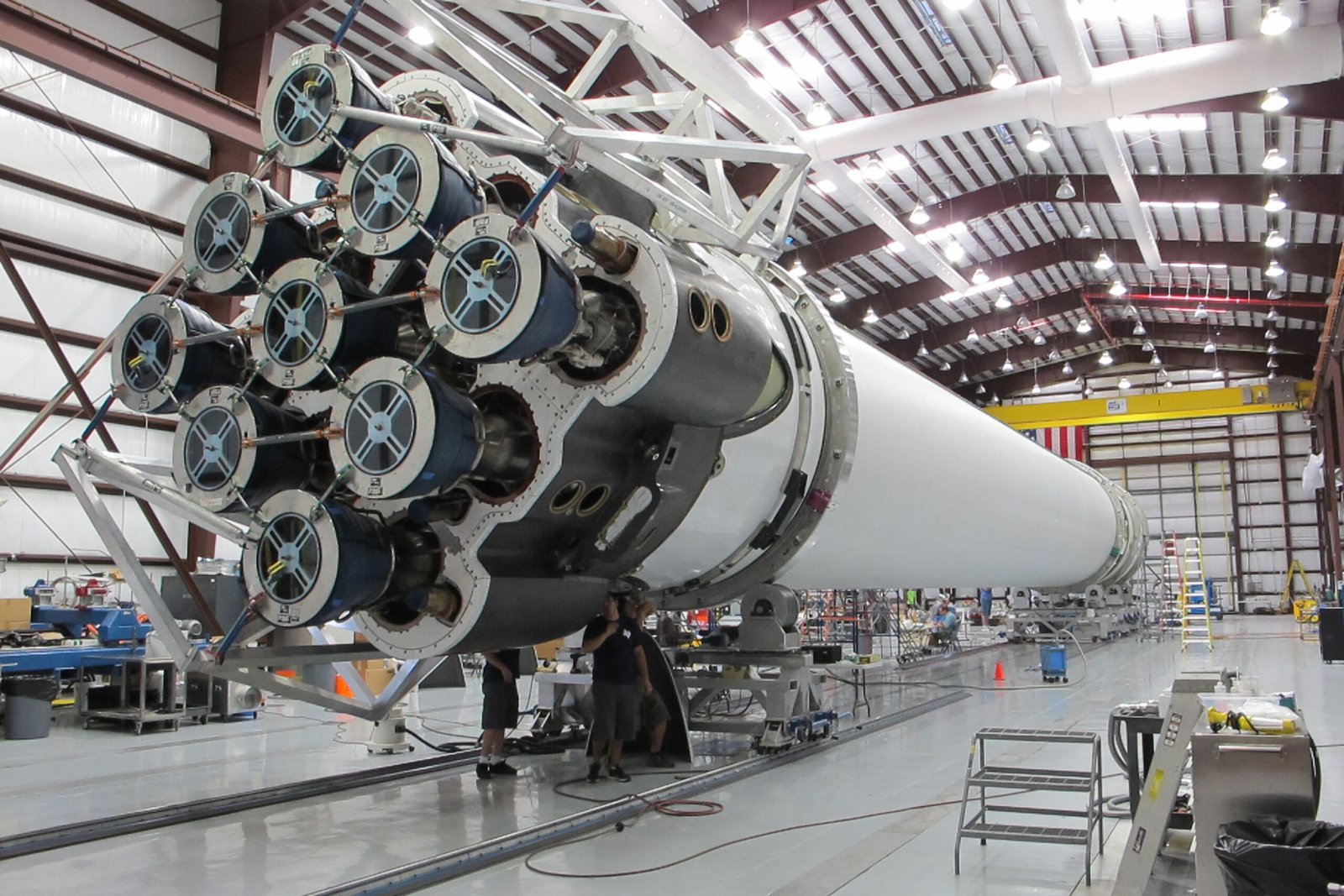
Yet when we look at contemporary spaceflight, we confront a sobering physical reality: human civilization remains firmly shackled to chemical propulsion. Whether aboard the historic Saturn V that carried Apollo astronauts to the Moon, SpaceX’s Starship, or NASA’s Space Launch System (SLS), we continue to ignite liquid or solid propellants to generate thrust — applying the same foundational physics explored by rocketry pioneers Robert Goddard and Konstantin Tsiolkovsky more than a century ago.
The fundamental issue is that chemical rockets have reached their absolute thermodynamic ceiling. To escape Earth’s deep gravity well and venture into deep space, more than 90% of a rocket’s total launch mass must consist of propellant simply to lift the fuel itself. Under this restrictive chemical paradigm, a crewed mission to Mars remains a perilous three-year round-trip endurance test, subjecting astronauts to cumulative galactic cosmic radiation doses and severe zero-gravity musculoskeletal atrophy.
To evolve into a genuine interplanetary species, we must break these chemical chains. In this deep dive from Reach Technocracy, we examine the advanced propulsion architectures advancing from research laboratories to active flight readiness: from the gentle efficiency of electrostatic and Hall-effect ion thrusters, through the atomic strength of Nuclear Thermal Propulsion (NTP) and real-world Direct Fusion Drives (DFD), to photon solar sails and relativistic laser arrays designed to reach the nearest stars.
1. The Tyranny of the Rocket Equation and the Thermodynamic Ceiling
To understand why chemical rockets cannot efficiently power deep-space civilization, we must examine the governing equation of astronautics: the Tsiolkovsky Rocket Equation, formulated by Russian mathematician Konstantin Tsiolkovsky in 1903:
Delta-V = ve · ln(m0 / mf)
Where:
- Delta-V (Δv): Denotes the total velocity change the spacecraft can execute (its orbital velocity budget).
- ve: Represents the effective exhaust velocity of the propellant exiting the engine nozzle.
- m0: Is the initial wet mass of the vehicle (chassis, payload, and propellant).
- mf: Is the dry mass of the vehicle after propellant exhaustion.
The crux of this formulation lies in the natural logarithm (ln). Because the function scales exponentially, doubling a spacecraft’s terminal velocity does not require doubling the fuel mass; it requires an exponential increase in propellant to accelerate the fuel’s own mass during the burn. This mathematical bottleneck is celebrated in aerospace engineering as The Tyranny of the Rocket Equation.
Specific Impulse (Isp): The Universal Metric of Fuel Efficiency
In propulsion physics, the paramount figure of merit is Specific Impulse (Isp), measured in seconds. In physical terms, Isp quantifies the duration in seconds for which one kilogram of propellant can generate one kilogram-force of thrust. A higher Isp directly corresponds to greater fuel efficiency and operational range.
The fundamental limits of chemical combustion are bound by molecular bond enthalpy:
- Kerosene with Liquid Oxygen (RP-1/LOX — Falcon 9): Isp between 310 and 350 seconds.
- Liquid Methane with Liquid Oxygen (Methalox — Raptor / Starship): Isp between 360 and 380 seconds.
- Liquid Hydrogen with Liquid Oxygen (Hydrolox — RS-25 / SLS): Isp of approximately 450 seconds.
Four hundred and fifty seconds represents the thermodynamic ceiling of chemical bond chemistry. No stable molecular combinations on the periodic table can surpass this energy density. Consequently, unlocking order-of-magnitude velocity enhancements requires departing chemical reactions altogether in favor of electrostatic acceleration, nuclear thermodynamics, and magnetized plasma physics.
2. Electric and Ion Propulsion: The Continuous Low-Thrust Marathon
If chemical rocket engines operate like dragsters — expending tons of fuel in minutes with immense, explosive force —, Space Electric Propulsion behaves like an ultra-marathoner: delivering gentle thrust continuously across months or years in the frictionless vacuum of space.
Two primary electric propulsion architectures dominate modern astronautics:
- Gridded Electrostatic Ion Thrusters: An inert heavy propellant (typically Xenon or Argon) is injected into an ionization chamber where electron bombardment strips electrons from neutral atoms, producing positive ions (Xe+). High-voltage electrostatic grids accelerate these charged ions to extreme exhaust velocities between 30 and 50 km/s (exceeding 100,000 km/h) before expelling them through the nozzle.
- Hall Effect Thrusters (HETs): Employ a radial magnetic field cross-coupled with an axial electric field to trap circulating electrons in an annular plasma channel, accelerating a continuous plasma stream with exceptional electrical efficiency.
Operational Strengths and Inherent Trade-offs
The performance metrics of electric propulsion are transformative:
- Unmatched Fuel Efficiency: Delivers specific impulses ranging from 1,500 to 5,000 seconds — up to ten times greater than the finest chemical rocket engines.
- Radical Mass Reduction: Deep-space exploration probes can execute sophisticated orbital maneuvers across the Solar System while carrying only dozens of kilograms of inert propellant.
This technology has proven its operational viability across flagship missions: NASA’s Dawn spacecraft (which orbited asteroids Vesta and Ceres), ESA’s BepiColombo (en route to Mercury), and thousands of SpaceX Starlink satellites utilizing Hall thrusters for autonomous orbital station-keeping and collision avoidance.
The Fundamental Trade-off: Ion engines produce minuscule absolute thrust — measured in fractions of a Newton (equivalent to the weight of a sheet of paper resting in your hand). While incapable of lifting payloads off planetary surfaces against gravity, their steady, uninterrupted acceleration in deep space accumulates unprecedented velocity over time.
3. Nuclear Thermal Propulsion (NTP): Reigniting the Atomic Fire
Transporting heavy crewed habitats and human exploratory teams to Mars requires an architecture that unites high specific impulse with high instantaneous thrust. That capability resides in Nuclear Thermal Propulsion (NTP).
The thermodynamic mechanism of an NTP engine is straightforward:
- Rather than relying on chemical combustion, the vehicle houses a compact nuclear fission reactor fueled by High-Assay Low-Enriched Uranium (HALEU).
- The reactor core operates at extreme thermal regimes exceeding 2,700 Kelvin (> 2,400 °C).
- Cryogenic liquid hydrogen is pumped directly through the ultra-hot reactor core channels. The hydrogen absorbs extreme thermal energy, expands violently, and exhausts through a convergent-divergent rocket nozzle at hypersonic velocities.
Because gas exhaust velocity is inversely proportional to the square root of molecular weight, and diatomic hydrogen (H2) is the lightest molecular element in existence, exhaust velocity instantly doubles relative to heavy chemical combustion products:
- Specific Impulse of NTP: Ranges between 850 and 1,000 seconds (more than double advanced chemical engines).
- High Thrust Output: Generates tens to hundreds of kilonewtons of thrust, facilitating rapid translunar and trans-Mars injection maneuvers.
From Project NERVA to NASA and DARPA’s DRACO Program
Nuclear propulsion is grounded in extensive historical validation. During the 1960s and 1970s, the United States executed the NERVA (Nuclear Engine for Rocket Vehicle Application) project, successfully building and testing full-scale flight-ready reactors in the Nevada desert before political priorities shifted in the post-Apollo era.
Today, NASA and DARPA have revived this capability through the DRACO (Demonstration Rocket for Agile Cislunar Operations) program, aiming to demonstrate an operational NTP engine in cislunar orbit.
Deploying NTP propulsion cuts crewed Earth-to-Mars transit durations from 9 months down to 45 to 90 days. This dramatic reduction mitigates fatal radiation exposure, preserves astronaut physiological health, and enables flexible abort-to-Earth trajectories that are impossible under chemical flight profiles.
4. The True “Epstein Drive”: Direct Fusion Drives (DFD)
While nuclear fission represents a massive capability leap, the ultimate frontier of energetic astrophysics is nuclear fusion — the celestial reaction powering the core of stars.
Researchers at the Princeton Plasma Physics Laboratory (PPPL) and Princeton Satellite Systems are pioneering the Direct Fusion Drive (DFD) — an advanced aerospace propulsion concept closely mirroring science fiction’s theoretical fusion drives.
How Does the Direct Fusion Drive Function?
The DFD leverages an innovative magnetic confinement topology known as the Field-Reversed Configuration (FRC):
- A magnetized plasma core of Deuterium and Helium-3 (D-3He) is contained within a linear magnetic field and heated to hundreds of millions of degrees using rotating magnetic radiofrequency fields.
- The D-3He fusion reaction is aneutronic, releasing energy primarily as charged protons and alpha particles with minimal destructive neutron flux.
- An open magnetic mirror nozzle channels the superheated fusion exhaust directly into space as high-velocity propulsive thrust.
- Simultaneously, auxiliary energy is extracted from the plasma via magnetohydrodynamic generators, producing megawatts of clean onboard electrical power.
Projected performance metrics for the Direct Fusion Drive are extraordinary:
- Specific Impulse: 10,000 to 100,000 seconds.
- Continuous Thrust Capacity: Unprecedented power-to-weight ratios capable of sustained interplanetary acceleration.
A spacecraft powered by a DFD could reach Pluto in just 4 years (compared to nearly 10 years for New Horizons), arriving not on a transient high-speed flyby, but decelerating into stable planetary orbit while delivering continuous megawatts of power to support advanced scientific instruments and long-range planetary radar arrays.
5. Harnessing the Photon Ocean: Solar Sails and Relativistic Laser Arrays
What if an interplanetary vessel required zero onboard propellant mass throughout its entire mission lifecycle? This is the fundamental premise of Solar Sails.
The physics of solar sailing relies on classical Maxwellian electrodynamics and Einsteinian optics: although photons carry zero rest mass, they possess momentum (p = E / c).
When sunlight impacts a massive, ultra-reflective gossamer membrane (manufactured from aluminized Mylar, Kapton, or graphene metamaterials), photons bounce off the reflective surface. In accordance with Newton’s Third Law, this momentum transfer imparts a continuous propulsive force to the sail. Because solar radiation is continuous and inexhaustible across the inner Solar System, a solar sail’s effective Specific Impulse is theoretically infinite.
Milestone missions have verified this capability in deep space:
- JAXA’s IKAROS (2010), which sailed to Venus powered solely by a 14-meter polyimide sail.
- The Planetary Society’s LightSail 2 (2019), demonstrating controlled orbital elevation maneuvers in low Earth orbit using solar photon pressure alone.
The Interstellar Horizon: Breakthrough Starshot
While solar photon density declines with distance, the international Breakthrough Starshot initiative proposed a revolutionary concept for interstellar transit:
- 1. Construct a ground-based or lunar-based phased laser array delivering 100 Gigawatts of coherent optical power.
- 2. Affix micro-probes (StarChips weighing approximately 1 gram, containing sub-miniature sensors, power systems, and communications hardware) to meter-scale reflective metamaterial sails.
- 3. Direct the intense laser beam at the sail for several minutes, subjecting the micro-probe to extreme acceleration until it reaches 20% the speed of light (0.2c ≈ 60,000 km/s)!
At this relativistic velocity, a Starshot probe would traverse the 4.24 light-year chasm to Alpha Centauri and Proxima Centauri in just 20 years, beaming the first high-resolution optical reconnaissance of potentially habitable exoplanets (such as Proxima b) back to Earth.
6. Conclusion: The Dawn of an Interplanetary Civilization
The arc of human history has consistently been written by breakthroughs in transportation infrastructure: from dugouts and ocean-going caravels to steam locomotives and supersonic aviation.
In the realm of astronautics, chemical rockets fulfilled their historic purpose as the foundational stepping stones that lifted humanity out of its terrestrial cradle to set foot upon the Moon. Yet navigating the wider cosmic ocean demands entirely new propulsion paradigms.
Electrostatic ion engines, nuclear thermal reactors, direct fusion drives, and relativistic photon sails are not speculative abstractions; they are concrete engineering frameworks actively charting humanity’s path toward permanent multi-planetary presence.
At Reach Technocracy, we will remain dedicated to analyzing each hot-fire test, plasma model, and aerospace engineering milestone bringing us closer to the day when deep-space navigation transforms from science fiction into routine reality.
Which propulsion paradigm do you believe will power humanity’s first crewed landing on Mars: atomic nuclear thermal rockets or next-generation fusion drives? Share this article with your network of space enthusiasts, and leave your thoughts in the comments below!
🔭 Continue Exploring the Frontier of Science and Technology: