
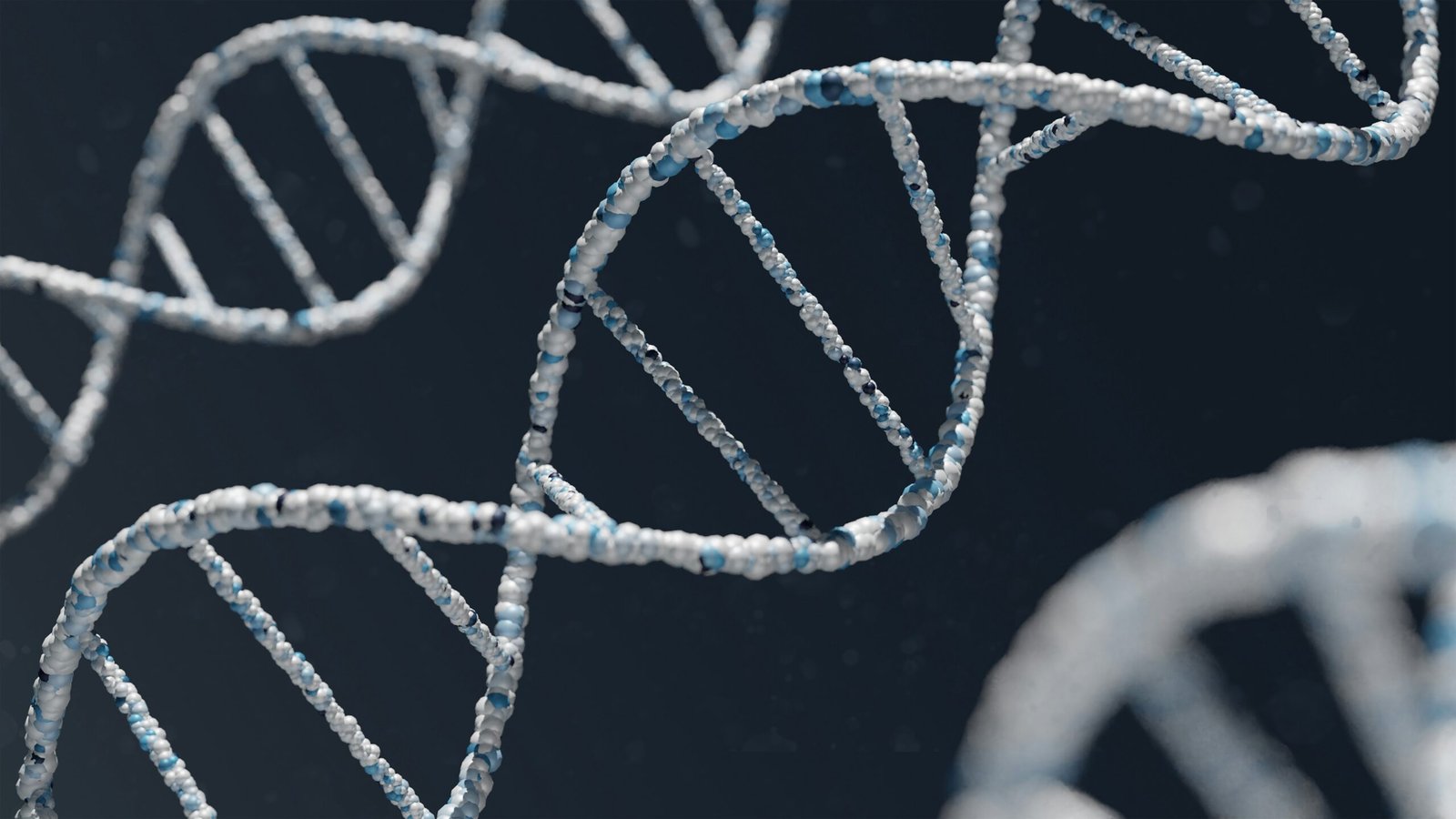
If you watched Ridley Scott’s immortal science fiction masterpiece Alien (1979), you undoubtedly remember the central mainframe aboard the commercial starship Nostromo: the enigmatic MU-TH-UR 6000 (or simply “Mother”), a bio-cybernetic operating system governing interstellar telemetry while the Weyland-Yutani Corporation relentlessly sought to synthesize biological organisms capable of living data computation.
If your cinematic compass points toward the desert landscapes of Arrakis in Denis Villeneuve’s Dune (2021/2024), the total prohibition of thinking machines following the historic Butlerian Jihad forced human civilization to develop Mentats: humans whose biological neurology was reprogrammed to serve as living supercomputers, executing complex mathematical calculations and geopolitical probability modeling in fractions of a second. Or consider Steven Spielberg’s Jurassic Park (1993), where the core scientific premise of recovering digital genetic code preserved intact for over 65 million years within fossilized DNA demonstrated the near-immortal stability of life’s master molecule.
For nearly a century, digital computing and molecular biology evolved along entirely separate technological trajectories. Computer engineering built rigid integrated circuits composed of silicon wafers, copper traces, and high-voltage electrical currents, while biological evolution utilized flexible polymers of nucleic acids, enzymatic catalysts, and biochemical reactions in aqueous solutions.
However, conventional electronic semiconductors are approaching an insurmountable thermodynamic and energetic crisis. Hyperscale artificial intelligence data centers already consume more electrical power than medium-sized industrial nations. Even more critical, approximately 80% of all electrical energy consumed within modern AI supercomputing clusters is not spent executing mathematical logic, but simply dragging physical electrons back and forth between graphics processing units (GPUs) and dynamic RAM memory chips across the infamous Von Neumann Memory Wall.
To resolve this global scaling bottleneck, materials science and synthetic biology achieved a historic breakthrough on August 17, 2026: the fabrication of the world’s first Bio-Hybrid DNA-Semiconductor Memory and Processing Devices, integrating strands of synthetic DNA directly onto solid-state silicon chip platforms.
This architecture does not merely store 215 Petabytes of digital data within a single gram of biological matter for thousands of years with zero electrical power consumption; it goes a step further by executing In-Memory Computing, where Watson-Crick molecular hybridization performs parallel artificial intelligence pattern matching natively within the storage substrate itself.
In this deep dive from Reach Technocracy, we lift the hood on this bio-digital revolution. We will examine the information density of DNA, explore how semiconductors interface with organic molecules, analyze localized enzymatic DNA synthesis powered by silicon microelectrodes, discover how base pairing executes neural network logic, and evaluate the environmental impact of bio-hybrid memory across future green computing infrastructure.
1. The Global Data Storage Crisis and the Von Neumann Memory Wall
To appreciate the urgency of bio-hybrid computing, we must first examine the thermodynamic fragility of human digital infrastructure.
By 2026, global civilization generates over 180 Zettabytes of digital data annually (1 Zettabyte equals 1 trillion Gigabytes). This vast ocean of neural network parameters, high-resolution scientific telemetry, medical records, and digital communications relies upon three legacy storage media: mechanical hard disk drives (HDDs), magnetic tape reels, and solid-state flash drives (SSDs).
These storage media suffer from three fundamental architectural flaws:
Rapid Physical Degradation
Mechanical magnetic platters and flash memory gates degrade within 5 to 10 years due to thermal demagnetization and dielectric oxide breakdown. Hyperscale cloud providers are forced into a relentless, costly cycle of migrating petabytes of historical archives across hardware generations to prevent permanent data loss.
Continuous Idle Power Consumption
Maintaining charge state in silicon memory registers requires massive electrical baseload power and millions of liters of coolant fluid daily. Modern server racks burn energy 24/7 simply to keep volatile data states from evaporating.
The Von Neumann Interconnect Bottleneck
In classic Von Neumann computing architectures, the processing core is physically segregated from memory banks. In massive generative AI architectures featuring hundreds of billions of weights, GPUs spend the vast majority of clock cycles stalled, waiting for data to traverse copper buses, generating severe Joule heating.
2. DNA: Nature’s Ultimate Solid-State Hard Drive at 215 Petabytes Per Gram
While human engineers struggle to etch bits onto silicon gates measuring a few nanometers, biological evolution has refined, over 3.8 billion years, the densest, most durable information storage medium in the cosmos: the Deoxyribonucleic Acid (DNA) molecule.
DNA operates mathematically as a Quaternary Base-4 Digital Storage System:
- While digital electronics rely upon a binary base-2 architecture (bits 0 and 1), DNA encodes information across four distinct nucleotide nitrogenous bases: Adenine (A), Cytosine (C), Guanine (G), and Thymine (T).
- Each complementary base pair digitally encodes 2 bits of data (e.g., A = 00, C = 01, G = 10, T = 11).
The physical and chemical properties of DNA offer overwhelming advantages over electronic media:
Astronomical Storage Density
DNA stores data at the sub-nanometer molecular scale. A single gram of dried synthetic DNA possesses a theoretical capacity of 215 Petabytes (215 million Gigabytes, or roughly 1 billion gigabytes packed into a single cubic millimeter). Theoretically, the entire digital output of human civilization across history could be encoded and stored within a container the size of a standard sugar cube.
Millennial Longevity with Zero Idle Energy
Unlike electronic NAND flash that degrades in years, DNA is an exceptionally stable biochemical polymer. When encapsulated in dry synthetic silica matrices, DNA remains readable for tens of thousands or even millions of years at room temperature, consuming zero operational watts.
Total Immunity to Technological Obsolescence
Floppy disks, magnetic tape formats, and optical discs became unreadable because industry stopped manufacturing legacy drive hardware. DNA, by contrast, will never become obsolete: as long as human civilization remains biological, science will continually develop and refine instruments to sequence and read the code of life.
3. The August 17 Breakthrough: The Bio-Hybrid Semiconductor Architecture
Historically, DNA data storage was limited to “cold archives.” Writing data required centralized, toxic chemical synthesis processes, while reading data demanded massive laboratory sequencing platforms requiring days of processing latency.
The breakthrough announced on August 17, 2026 eliminated this operational barrier by engineering the Bio-Hybrid Semiconductor Platform.
Instead of storing DNA in liquid test tubes isolated from computing hardware, the new architecture immobilizes monolayers of synthetic single-stranded DNA directly onto CMOS silicon microelectrode arrays and Bio-Field-Effect Transistors (Bio-FETs):
Bio-Field-Effect Transistors (Bio-FETs)
The device features an array of solid-state field-effect transistors where the conductive gate channel is chemically functionalized with immobilized single-stranded DNA probes. When target complementary molecular strands hybridize to the surface, the binding event induces an immediate shift in surface electrostatic potential, modulating channel conductance and producing an instantaneous digital readout.
Localized Electrochemical Enzymatic Synthesis
To write digital data into DNA without hazardous organic solvents, the silicon surface utilizes addressable microelectrodes that regulate the local chemical microenvironment within sub-micron reaction wells. Applying millivolt potentials selectively activates or suppresses the engineered polymerase enzyme TdT (Terminal deoxynucleotidyl transferase), sequentially appending nitrogenous bases (A, C, G, T) directly onto the chip surface at rates of hundreds of bases per second.
4. In-Memory Computing: DNA Performing Native AI Matrix Operations
The most transformative dimension of the bio-hybrid devices revealed in August 2026 is their capacity for In-Memory Computing.
In modern artificial intelligence workloads, data processing centers on three mathematical operations: Similarity Search, General Matrix Multiplication (GEMM), and Euclidean Distance Calculations.
In classical electronic computers, executing a high-dimensional vector search across billions of entries requires GPUs to stream data continuously from storage into registers, evaluating vectors sequentially.
In a DNA bio-hybrid chip, this operation executes via Massive Molecular Parallelism:
Watson-Crick Hybridization as an Analog Logic Gate
The fundamental thermodynamic affinity between nitrogenous bases (Adenine binding strictly to Thymine; Cytosine binding strictly to Guanine) functions as an intrinsic pattern-matching logic gate:
- Billions of unique high-dimensional data vectors are synthesized and immobilized as DNA strands across the chip array.
- To execute an AI query (e.g., searching for semantic concepts or facial recognition signatures), the user encodes the target feature vector into a short Query Strand.
- When the query strand solution is introduced into the bio-chip chamber, trillions of molecular hybridization binding events occur concurrently in parallel across the entire array within milliseconds.
- The query strand selectively binds only to data strands displaying high mathematical correlation. The underlying Bio-FET sensors register the resulting electrostatic charge shifts, delivering query results instantaneously.
This process executes the equivalent of trillions of parallel logic operations per second natively within the storage media, drawing virtually zero electrical power and eliminating Von Neumann bus bottlenecks entirely.
Deep-Dive: Error Correction and Solid-State Nanopore Readout
Reading dense molecular data from bio-hybrid surfaces requires high-bandwidth digital decoding. Next-generation platforms integrate solid-state silicon nitride nanopores with sub-angstrom ionic current sensors. As synthetic DNA molecules are translocated electrokinetically through the nanopore aperture, characteristic ionic current blockades resolve individual nucleotides (A, C, G, T) with single-base fidelity. To neutralize biochemical polymerase insertion errors and environmental base mutations, researchers deploy Reed-Solomon algebraic error-correcting codes and fountain decoding algorithms. This digital layer guarantees error-free information reconstruction even if a substantial percentage of biological strands experience physical damage.
5. Sustainability and the Era of Green Molecular Data Centers
The global environmental implications of transitioning cold storage to bio-hybrid DNA platforms are profound:
Decarbonizing Hyperscale Data Centers
Operating and cooling hyperscale AI infrastructure accounts for tens of gigawatts of global power demand. Transitioning archival databases and model checkpoint weights to bio-hybrid DNA cartridges has the potential to reduce data center operational energy footprints by up to 95%.
Eliminating Semiconductor E-Waste
Decommissioned hard drives and SSDs generate millions of tons of hazardous electronic waste annually, laden with heavy metals. Synthetic DNA is a fully organic, biodegradable, and non-toxic polymer, establishing a foundation for Closed-Loop Circular Computing.
The Library of Human Eternity
Global organizations, archival institutions, and space exploration agencies are already developing permanent preservation initiatives: encoding the entire sum of human literature, historical audio archives, James Webb Space Telescope deep-field imagery, and foundational open-source operating software into silica-encapsulated DNA to ensure human knowledge survives for deep time.
6. Conclusion: The Grand Convergence of Silicon and Carbon
Throughout the first eighty years of the digital age, humanity operated on the premise that computational intelligence belonged exclusively to inorganic silicon. We manufactured metallic microchips of increasing density, pushing electron physics to the brink of thermodynamic collapse.
The advent of Bio-Chips and DNA Molecular Memory proves that the ultimate architecture for scalable, sustainable data computation was engineered by nature inside living cells billions of years ago.
By merging the switching speed of solid-state semiconductor electronics with the atomic density and energy efficiency of synthetic DNA, modern science is forging an unprecedented bio-digital symbiosis — uniting silicon and carbon to process and preserve the intellectual heritage of human civilization for the millennia to come.
At Reach Technocracy, we will remain dedicated to analyzing every breakthrough in enzymatic DNA synthesis, bio-FET transistor architectures, and molecular computing that bridges the gap between deep science and the future of technology.
Would you trust synthetic DNA to preserve your most vital digital memories and humanity’s shared historical knowledge? Do you believe bio-computing will outperform electronic supercomputers in large-scale AI search within the next decade? Share this deep dive with your technology and biotechnology network, and let us know your thoughts in the comments below!
🔭 Continue Exploring the Frontier of Science and Technology: